

Description
Date: Saturday 13.02.2027
Location: Panorama Hotel
Analipseos 26 Panorama,
Thessaloniki, PC 55236, Greece
Participation fee: 600 euros
Max number of participants: 15
Scientific Director: Stephan Kruck, Urologist
600,00 €
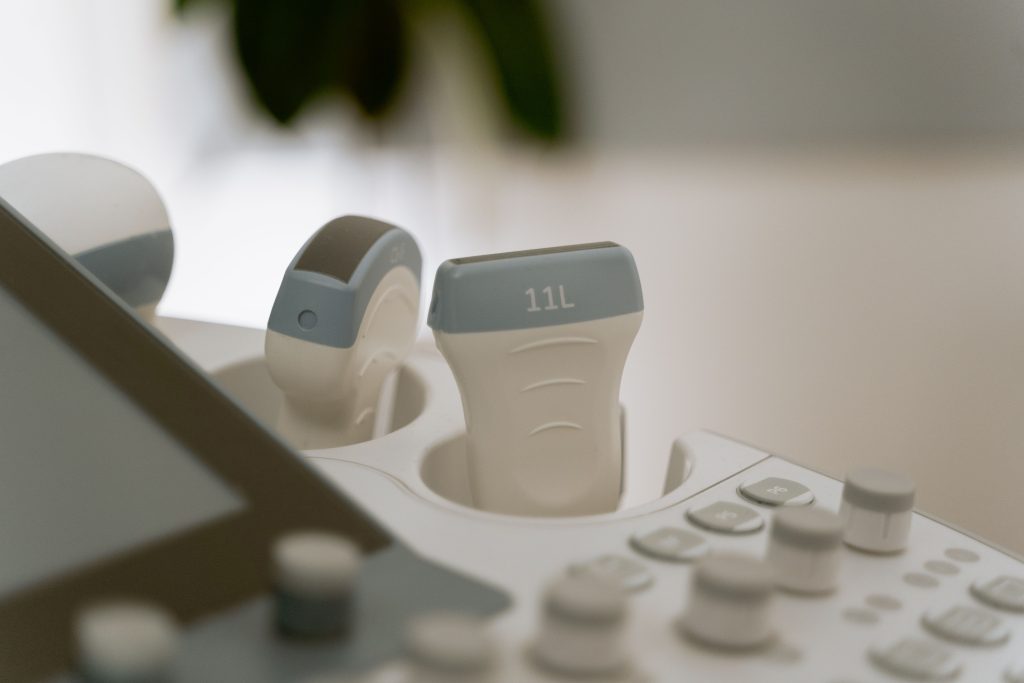
Ultrasonography remains a core diagnostic tool in everyday urological practice, providing immediate, non-invasive, real information for the assessment of the kidneys, bladder and prostate. A solid understanding of ultrasound physics, image optimisation and normal sonoanatomy is essential before progressing to advanced prostate imaging.
During this one-day, English-language course, we will combine focused theoretical instruction with practical training in fundamental ultrasound techniques, with particular emphasis on contemporary prostate imaging. The advanced modules will cover systematic transrectal ultrasound (TRUS), MRI/ultrasound fusion, 29-MHz micro-ultasound, AI-assisted image interpretation, and robotic navigation for targeted prostate diagnostics. Practical sessions will focus on basic scanning techniques, image optimisation, case-based prostate image interpretation, fusion planning, and robotic navigation workflows.
14 in stock
Date: Saturday 13.02.2027
Location: Panorama Hotel
Analipseos 26 Panorama,
Thessaloniki, PC 55236, Greece
Participation fee: 600 euros
Max number of participants: 15
Scientific Director: Stephan Kruck, Urologist
Time Theme
08:30 – 09:00 Registration – welcome
09:00 Brief welcome from Scientia
09:00 – 09:30 Theoretical part I – Foundations of Urological Ultrasound
09:30 – 10:00 Theoretical part II – Basic Urosonology
10:00 – 11:30 Hands on SessionI I – Basic Sonoanatomy and image Optimisation
11:30 – 11:45 Short coffee break
11:45 – 12:15 Theoretical part III – Prostate Imaging I: Systematic TRUS
12:15 – 13:45 Workshop II – Prostate Ultrasound and Case-Based Imaging
13:45 – 14:15 Lunch break
14:15 – 14:45 Theoretical Part IV – MRI Fusion, Micro-US and Robotic Navigation
14:45 -16:15 Workshop III – MRI Fusion, Target Planning and Robotic Navigation
16:15 – 16:30 Quiz and key learning points
16:30 Conclusion and discussion